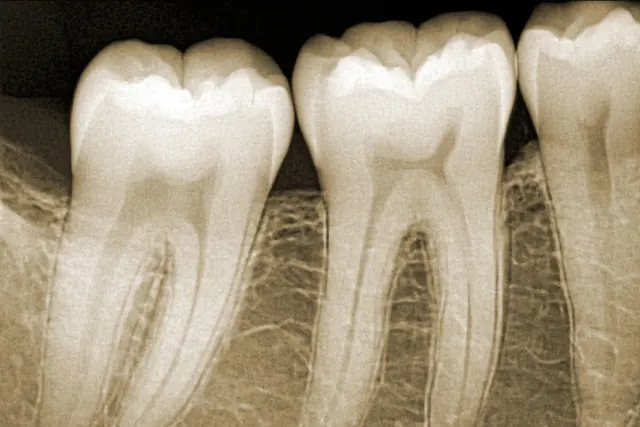
Before: X-ray and plan
We use the X-ray to see how the teeth are positioned and where the nerves run. Then we discuss whether one, two or all four should come out.
Quick surgery. Healing is what counts
Taking out wisdom teeth rarely takes long. What happens afterwards decides what your week looks like. That’s why we use your own blood in wisdom tooth surgery: it contains the signalling molecules that kick-start wound healing. Here’s why that makes a difference.
Not every wisdom tooth has to come out. If it’s straight, has fully come through and you can clean it properly, it can stay.
It has to go if it’s lying at an angle and damaging the tooth next to it, if the gum over it keeps getting inflamed, if decay develops where no brush can reach, or if it’s stuck in the jaw and causing pressure. If nothing else, the X-ray will show us which applies to you.
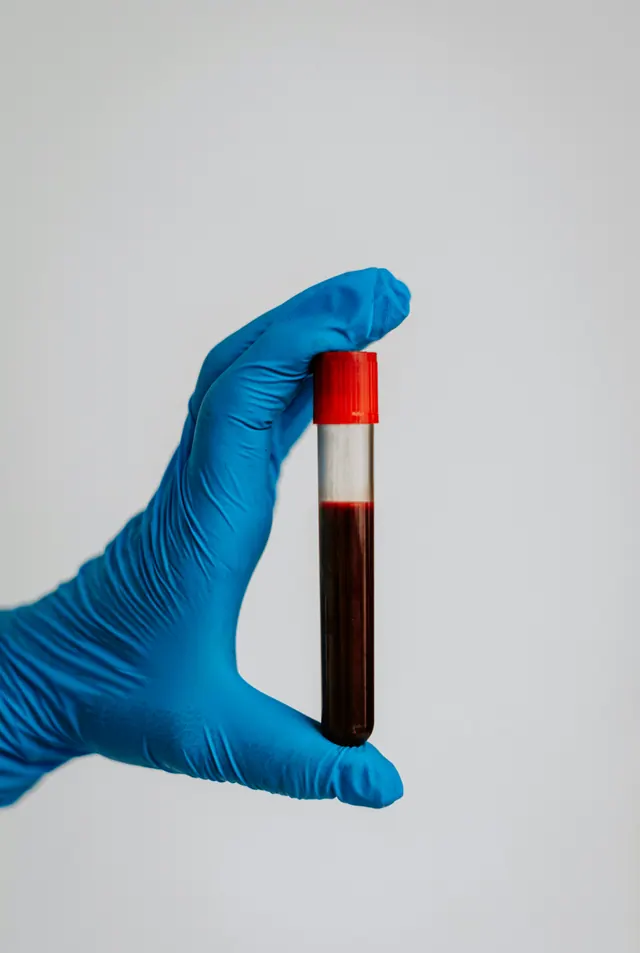
PRF stands for platelet-rich fibrin. We take a little of your blood, spin it in a centrifuge and extract the part in which the growth factors of your own blood are concentrated.
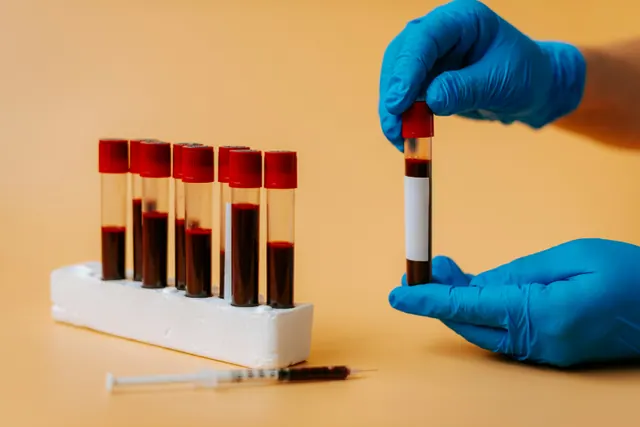
Your body heals in stages: first a blood clot forms as a scaffold, then repair cells move in, and only from around day three do they start building new tissue. Growth factors are the signal that calls these cells in. With PRF, the signal is there from the start: repair begins earlier.
We’re so convinced by this method, and have had such good results with it, that today we perform almost all tooth extractions with PRF. Less pain, faster wound healing, lower risk of infection. And better bone regrowth where the tooth used to be.
We use the X-ray to see how the teeth are positioned and where the nerves run. Then we discuss whether one, two or all four should come out.
Most procedures are done under local anaesthetic. If that’s not enough for you, we recommend nitrous oxide. Tell us early and we’ll plan it in. Twilight sedation or treatment under general anaesthesia are also possible.
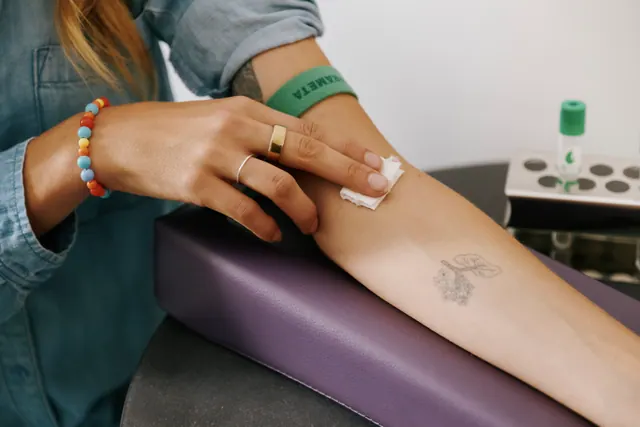
We take some blood and start the centrifuge. While it runs, we remove the tooth. Finally, the PRF goes into the wound and we stitch it closed.
After about a week, we check how it’s healing and take out the stitches.
Plan for a week. Swelling usually peaks on the second day. Cooling helps, but in a rhythm: for the first four to five hours after surgery, cool for 20 minutes, pause for 60, then cool for another 20. Always wrap the ice pack in a towel, never put it straight on your skin. Otherwise: keep your head up, take it easy, no exercise, no alcohol, no cigarettes, nothing hot. And please don’t drink through a straw: the suction can dislodge the blood clot, and that’s exactly what you don’t want.
Statutory health insurance covers the removal itself if it’s medically necessary. PRF, nitrous oxide and general anaesthesia are private services.

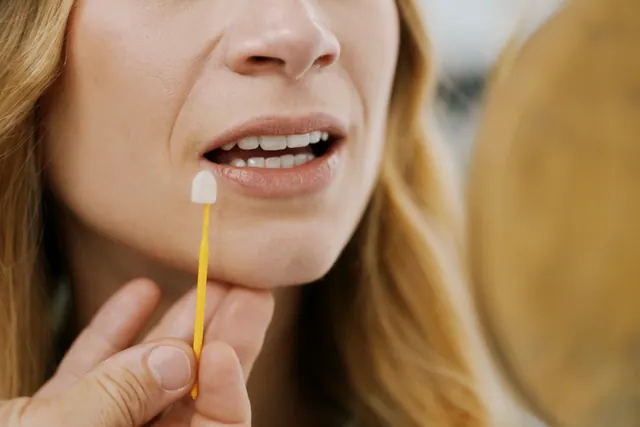
First of all, we listen: how can we help, what’s bothering you, what would you like? Then we look for the right solutions together and agree on materials and costs with you. In the end, the only thing that should leave you open-mouthed is how smoothly the week afterwards goes.
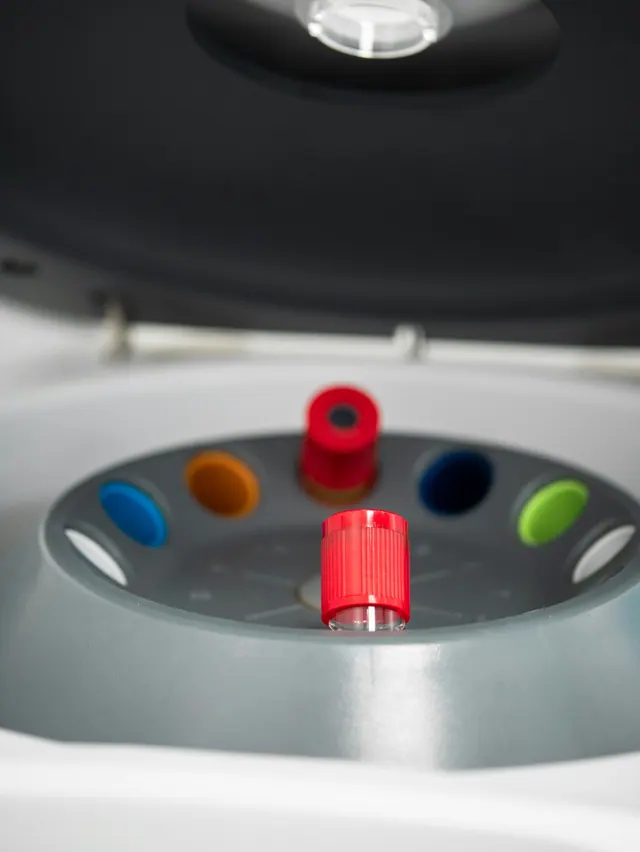
For us, using your own blood isn’t an upgrade for the demanding, it’s standard. We now remove teeth almost exclusively this way, because the week afterwards goes better.

We tell you beforehand what to expect, rather than leaving you to deal with it alone afterwards. If you have questions, call us: that’s what we’re here for.
Short answers to the things we're asked most often. If your question isn't here, just get in touch.
Your dentist sent you, or something at the back on the left has been pressing for days. Either is a good reason to come by. We look at the X-ray and tell you whether the teeth really have to come out, and what that means with us.
Let’s talk! (opens in a new tab)