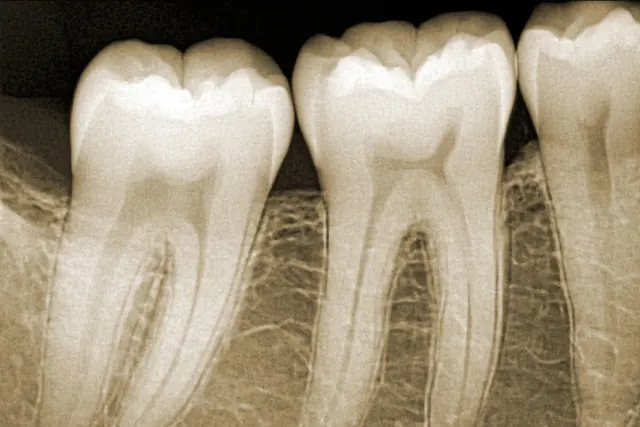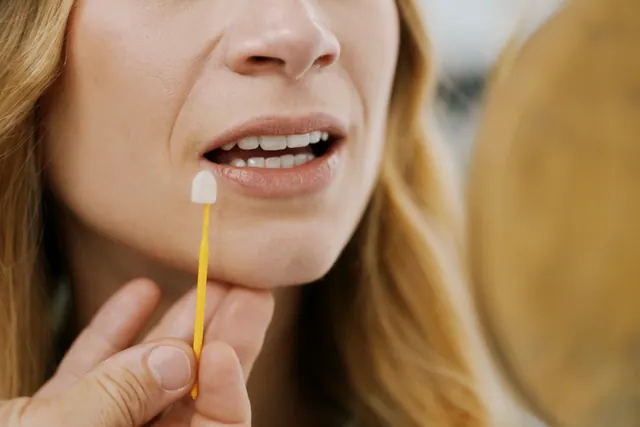
Medical history and palpation
We ask about pain, sleep, stress and previous treatment, and feel your jaw joint and chewing muscles. That alone narrows a lot down.
When nobody has found anything yet
Jaw pain, clicking when you chew, headaches with no diagnosis: TMD is often recognised late because the symptoms rarely show up where the cause lies. We measure your jaw joint electronically with the Zebris JMA: 45 to 60 minutes, completely painless.
TMD rarely shows up in the jaw alone. Typical signs are pain on one or both sides, limited mouth opening and clicking when you chew.
Often there are also tension headaches, migraine with aura, tightness in the neck and shoulders, dizziness, tinnitus or earache. If several of these sound familiar and your GP found nothing, it’s worth taking a look at your jaw.
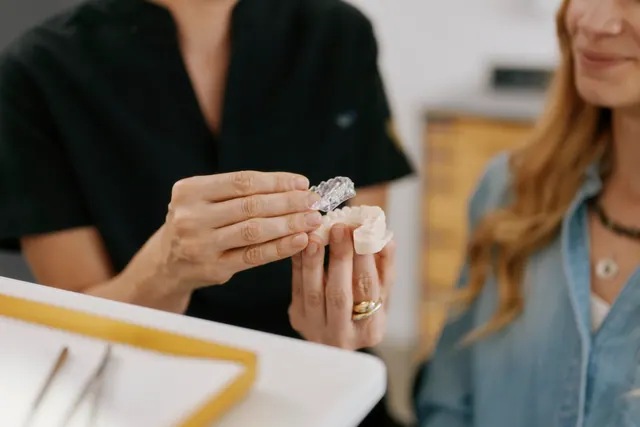
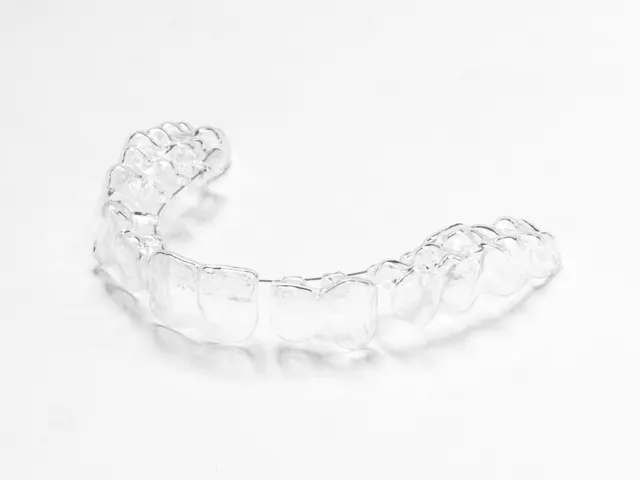
The splint separates your upper and lower jaw and takes pressure off the joint. We design it digitally from your scan and make it in our in-house dental lab.

Often the jaw needs support from outside. We work with physiotherapy, osteopathy and, where needed, ENT or orthopaedic specialists.

Statutory health insurance contributes to the splint. You pay the rest yourself, or your supplementary dental insurance does. The figures are below.
Many TMD diagnoses rely on palpation and experience. We also measure electronically: the Zebris JMA records how your jaw joint really moves. Your splint is then designed digitally in our in-house dental lab, not made in a standard size.
TMD stands for temporomandibular disorder, known in Germany as CMD: the jaw joint, chewing muscles and tooth contacts no longer work together smoothly. A common trigger is teeth grinding, a widespread condition that’s often linked to stress. Misaligned teeth, old fillings that sit too high or posture problems can also play a part. Because several factors come together, treating just one of them is rarely enough.
We ask about pain, sleep, stress and previous treatment, and feel your jaw joint and chewing muscles. That alone narrows a lot down.
A light measuring bow rests on the bridge of your nose, and a sensor is attached to your teeth. Then you move your jaw and we record what the joint actually does. It takes 45 to 60 minutes and doesn’t hurt.
Your teeth are captured digitally, with no impression trays. The scan and measurement data create your individual movement model.
We show you the recording and explain what we see. The treatment plan follows from that, not the other way round.
Most people don’t notice it themselves: partners hear it, or we see the worn surfaces. Grinding is a widespread condition and often has to do with stress. A night guard doesn’t stop the grinding, but it absorbs the force before it reaches your teeth and your joint.
There are two levels, and the difference is the measurement. It isn’t billed separately. Supplementary dental insurance usually covers your share.
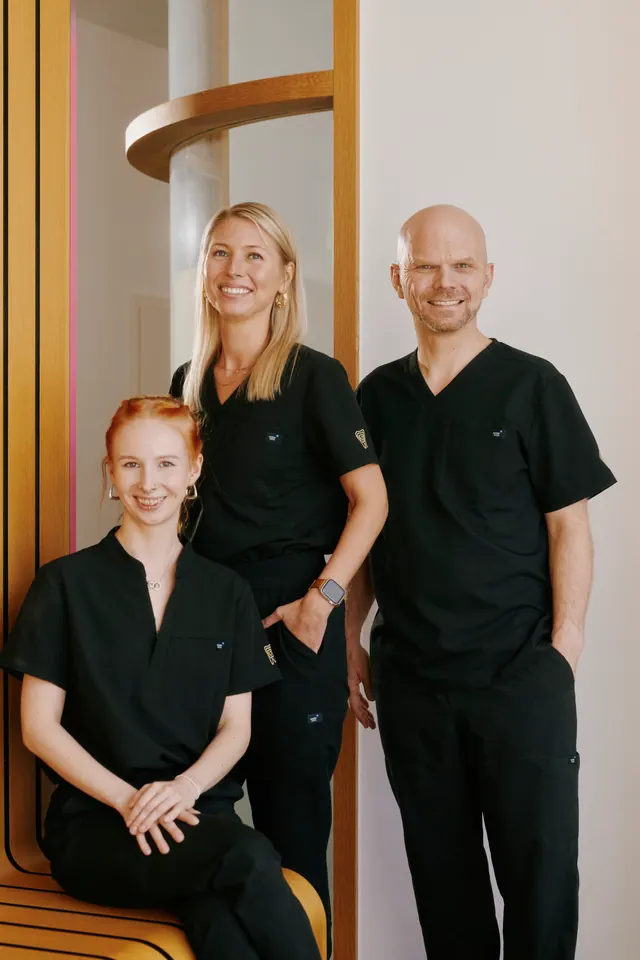
First of all, we listen: how can we help, what’s bothering you, what would you like? Then we look for the right solutions together and agree on materials and costs with you. In the end, there should be just one reason your mouth stays open: it finally opens again without pain.
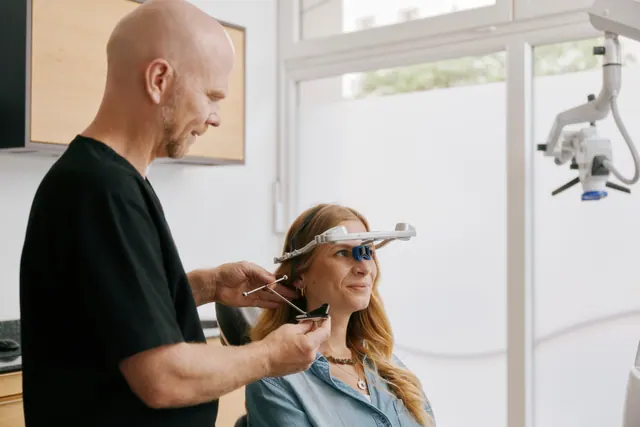
Before we talk about a splint, we record how your jaw moves. What we show you afterwards is your own measurement, not someone else’s rule of thumb.

TMD rarely stops at the jaw. If physiotherapy is part of it, we help organise it instead of just sending you elsewhere.
Short answers to the things we're asked most often. If your question isn't here, just get in touch.
If you’ve read this far, you’ve probably seen a few doctors already. Bring what you have: findings, scans, notes. We start by measuring, not by guessing.
Book an appointment now (opens in a new tab)