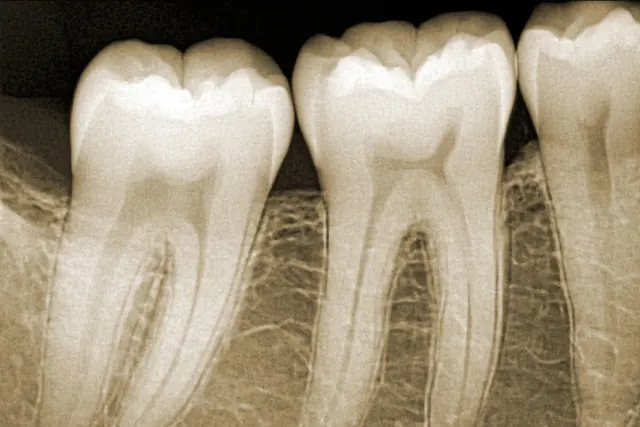
Scan and plan approval
We scan your teeth digitally. The manufacturer does the planning. We go through it with you and only approve it once it’s right. On screen, you can see in advance what the end result will be.
At first, nobody notices. Then everybody does.
Your teeth were already crooked at school, but braces were out of the question. With clear aligners you can catch up as an adult: transparent trays that barely show in everyday life, and in the end a straight smile that really does.

Aligners are invisible braces for adults: teeth straightening that barely anyone notices. You get a series of clear trays, each shaped very slightly differently from the one before. Each one is worn for two weeks and moves your teeth a little further. Ideally you wear it 23 hours a day: it only comes out for eating and brushing your teeth.
How many trays you’ll need is decided after the scan: the further your teeth have to move, the longer the series.
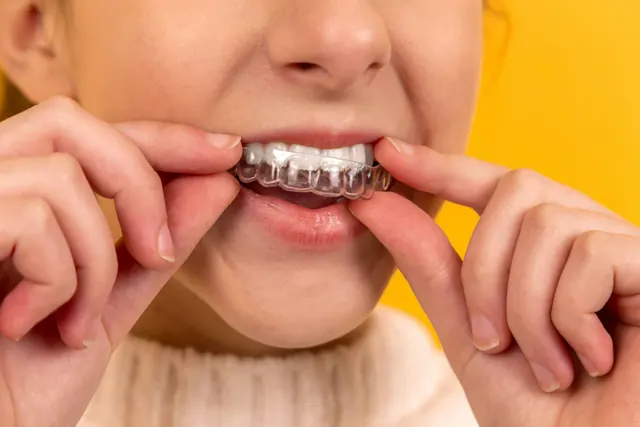
Mild to moderate misalignment: crowding, gaps, slightly shifted front teeth. That’s the range where aligners work reliably.

A severe overbite, a crossbite or an open bite can’t be corrected with aligners. In that case we’ll tell you so and recommend an orthodontic practice.

After treatment you always need a retainer, either a wire or a tray. Without it, your teeth drift back. It isn’t optional, it’s part of the treatment.
The manufacturer plans the trays, and progress checks run through a phone scan you do yourself. What happens with us is what no app can do: we bond the attachments, create space where your teeth have none, and decide whether aligners are right for your case at all.
We scan your teeth digitally. The manufacturer does the planning. We go through it with you and only approve it once it’s right. On screen, you can see in advance what the end result will be.
Then your series is produced. Once it arrives, we go through the schedule for changing trays and you get started.
Every two weeks you move on to the next tray. In between, you scan yourself with your phone: that way we can see whether everything is going to plan. You only come into the practice when it’s necessary.
Finally, you get a retainer so the result stays put. A wire behind your teeth or a tray to wear at night.
Statutory health insurers don’t cover aligners for adults. Private insurers often contribute. Check with yours beforehand.

We start by listening: how can we help, what’s bothering you, what would you like? Then we look for the right solutions together and agree on materials and costs with you. In the end, there should be only one reason for your jaw to drop: your healthy, radiant smile.
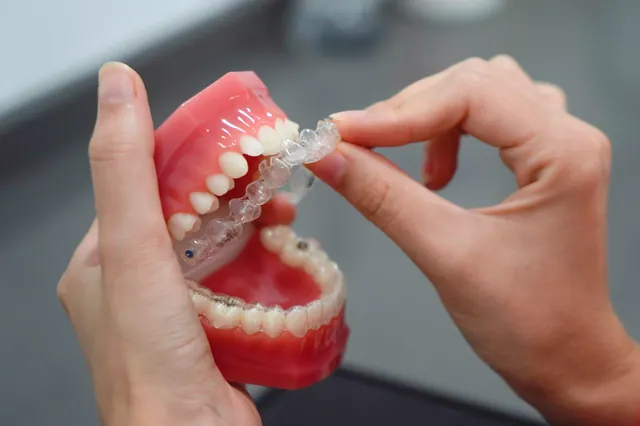
Before we talk about duration and costs, we scan. Then you can see what aligners can do for you, and what they can’t.
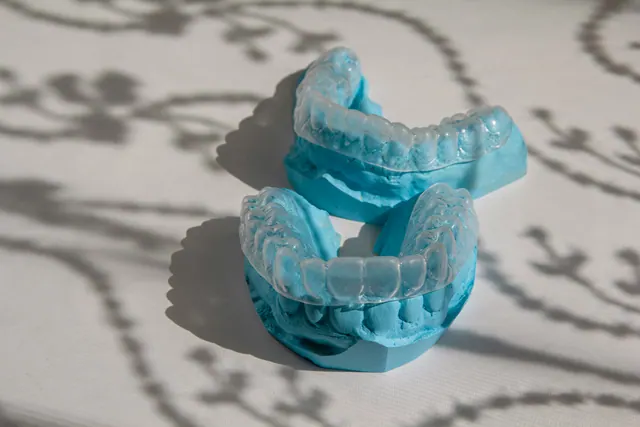
The retainer isn’t an upsell, it’s the final step of the treatment. Without it, everything before was only a temporary fix.
Short answers to the things we're asked most often. If your question isn't here, just get in touch.
You’ve probably been thinking about it for a while, and something is holding you back. Come by, we’ll take one look in your mouth and tell you what aligners could do, and what not. Then you decide whether to have the scan.
Get advice now (opens in a new tab)