How much do veneers cost? All prices at a glance
What a veneer really costs, and which items are missing from cheap offers.
- Published
- Reading time
- 9 minutes
In Germany, a ceramic veneer costs from around €1,500 per tooth, and a composite veneer from around €550 per tooth. If you want to see the result beforehand, there’s also a mock-up, from €150 per tooth.
That’s the short answer. The longer one is more interesting, because the range between quotes is huge, and it almost never comes down to the tooth itself, but to what happens around it, or doesn’t. I’m a dentist in Berlin and have been placing veneers for years. Here’s what you’re paying for.
Veneer costs per tooth: an overview
| Treatment | Price |
|---|---|
| Composite veneer, per tooth | from €550 |
| Ceramic veneer, per tooth | from €1,500 |
| Mock-up to try on, per tooth | from €150 |
| Consultation, one-off | €149 |
Two things stand out in this table. First: ceramic costs just under three times as much as composite. Second: the consultation is listed because it costs money: €149, and if you then decide to go ahead with treatment, that amount is credited towards it.
For that, you get photos, an examination and an assessment of what’s possible in your case. If you decide against treatment afterwards, you’ve paid €149 for an honest answer. That’s less than a wrong decision costs.
All other prices are starting prices. What you pay in the end depends on the findings, and you’ll only get a reliable figure after an examination. Anything else would be guesswork. How the materials differ in detail is covered in Types of veneers compared.
What affects the price?
The material
Composite is shaped directly in the mouth, in one session, without a lab. That makes it affordable and reversible. However, it discolours over the years and doesn’t last nearly as long. Ceramic is made in the lab, keeps its colour, is translucent like tooth enamel and, with good care, lasts more than a decade. So the price difference isn’t a mark-up: it’s a different product.
The lab
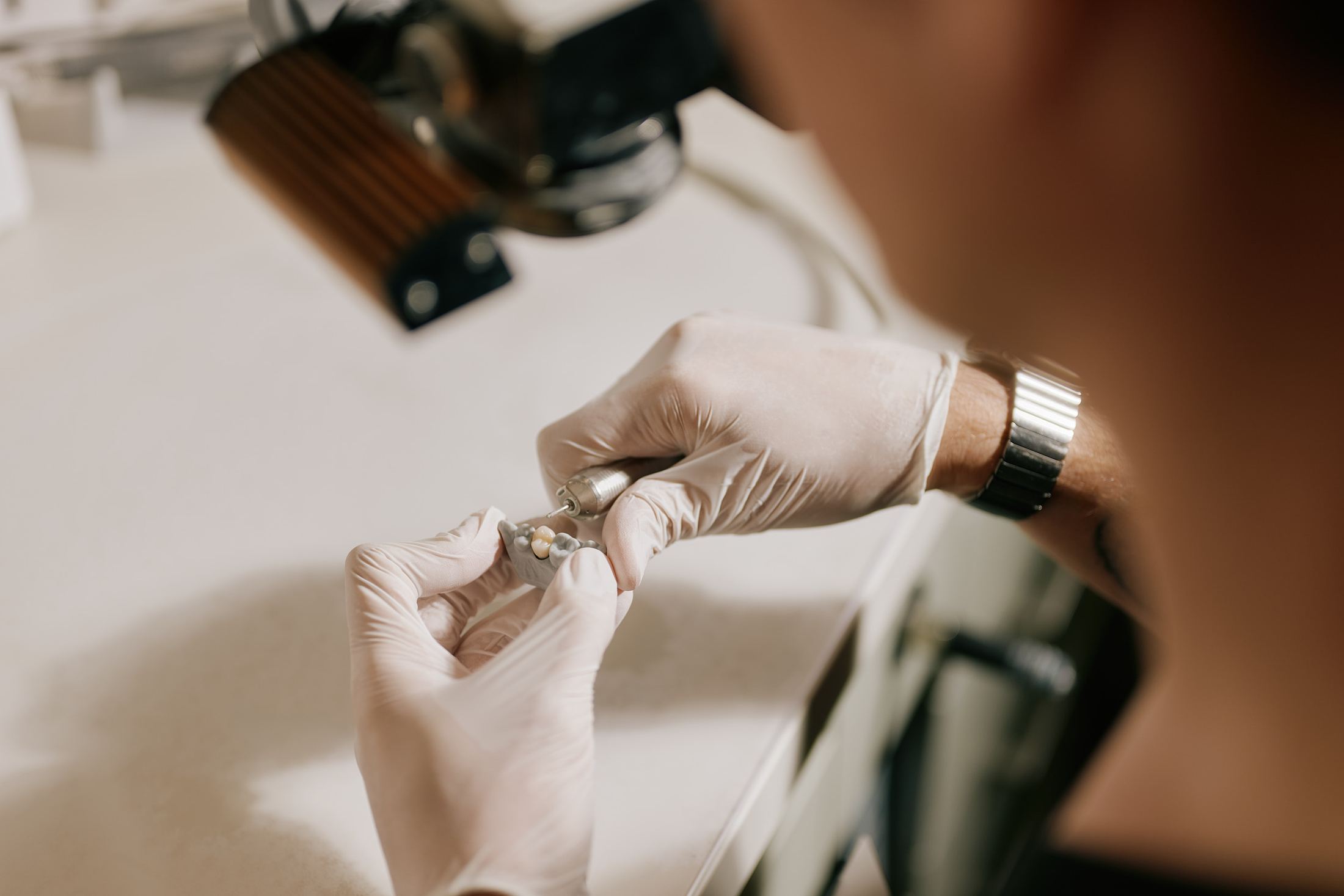
A ceramic veneer is built by a person, not by a machine alone. How long someone spends on it, and how often they correct it until it fits, goes straight into the price. Our veneers are made in our own in-house dental lab. That’s not the cheapest option. It’s the one where I can look over the dental technician’s shoulder.
The preparation
The mock-up is the step most often missing from cheap offers. We first plan your new teeth digitally, then I bond the planned shape in resin onto your untouched teeth. You walk around with it and show it to people; you can’t eat with it, as it’s too thin for that. Only after that do we grind anything. Skip this step and you save the cost of the mock-up, but risk a result you don’t like, except that by then it can no longer be undone.
The number of teeth
The price per tooth doesn’t go down if you have more done, and the mock-up is also charged per tooth. So there’s no volume discount: all that grows is the total. For a single tooth you usually don’t need a mock-up, so that item drops out altogether.
Who does it
Experience is the item nobody likes to see priced, and the one that makes the biggest difference. On front teeth, a tenth of a millimetre decides whether the result looks natural or looks done. That’s not something you learn on a weekend course.
What a veneer costs per year
This is the sum hardly anyone does, and the only one that tells you anything. In a long-term study from Innsbruck, 93.5 per cent of ceramic veneers were still functioning after ten years. Spread a starting price of €1,500 over ten years and that’s from €150 a year, and many last longer. Composite costs just under a third of that, but has to be replaced much sooner, and how much sooner depends heavily on whether you smoke, drink a lot of coffee or grind your teeth at night. Over five years, composite is the cheaper choice. Over twenty, it’s almost always ceramic.
Costs by scope of treatment
Three cases as we see them in our practice. All figures are starting prices for ceramic and are meant as a ballpark, not as a quote.
A single tooth
A chipped or discoloured front tooth that doesn’t match the others. We often don’t need a mock-up here, but sometimes we do; the findings decide. So you’re looking at from €1,500. Technically, though, it’s the most demanding case: a single veneer has to blend in between your natural teeth without standing out. Twenty new teeth are easier, because you set the standard yourself.
The six upper front teeth
Six ceramic veneers plus a mock-up for the upper jaw: from around €9,900 in total. In composite, the same scope would come to from €3,300. There, the mock-up is included in the price, but the result doesn’t last as long and you’ll be starting again in a few years.
The whole visible smile
Twenty teeth, both jaws, everything you show when you smile. The veneers alone come to from €30,000, and the mock-up is on top of that. That’s usually the point in the consultation where I ask whether it really has to be twenty.
The costs nobody thinks about
Three items don’t appear in any quote, yet they still make a difference. First: if you grind your teeth at night, you need a splint. That’s several hundred euros extra, and it isn’t a recommendation but a requirement: without it, you’re putting at risk the veneers you’ve just paid for. Second: your teeth need to be healthy beforehand. If you need a filling, a cleaning or gum treatment, that comes on top. Third: veneers don’t discolour, but your other teeth do. If you only have your front teeth done, you’ll need to match the colour again later.
With every quote, ask whether these three points were discussed. If they weren’t, it isn’t a cheap offer, it’s an incomplete one.
Does health insurance or supplementary insurance pay?
Statutory health insurance pays nothing towards veneers as long as they’re done for aesthetic reasons. That’s not a matter of interpretation; it’s the norm.
It’s different if a front tooth has broken in an accident or there’s a defect that needs treating anyway. Then your health insurer covers the fixed subsidy for standard care, usually a crown or a filling. If you choose a veneer instead, that subsidy is credited towards it and you pay the difference.
And supplementary dental insurance?
Here the most important point is an uncomfortable one: if you want veneers now and take out supplementary insurance today, you’ll get nothing for them. Insurers don’t pay for treatment that had already been recommended or was foreseeable when the policy was taken out. On top of that come waiting periods, often of eight months, and staggered limits that cap benefits in the first few years.
And even with a long-standing policy, most plans pay for dental prosthetics and dental treatment, not for aesthetics. Whether your plan includes veneers is set out in your terms and conditions. Look for “medically necessary” (“medizinisch notwendig”): everything hinges on that. If in doubt, ask your insurer in writing before treatment, not afterwards.
Cheap veneers: where the savings come from
There are offers of €400 per ceramic veneer, and even less abroad. These prices are real. The only question is what they leave out.
The savings are almost always made in the same four places. On materials, when a cheaper ceramic is used or composite is sold as ceramic. On the lab, when the work is passed on to a budget provider and nobody checks it before it goes in. On preparation, when planning and the mock-up are dropped and you see the result for the first time once it’s already in. And on appointments: if everything is supposed to happen in one day, the step in between, where things are checked and adjusted, is missing.
That last point is often misunderstood, so to be precise: lots of teeth in a short time isn’t a warning sign. Preparing twenty teeth takes me less than three hours. The warning sign is when there’s no second appointment, when nobody takes another look between preparing the teeth and fitting the final veneers.
The most expensive part comes afterwards. A veneer that doesn’t fit can’t be returned. The enamel underneath is gone, and correcting it regularly costs more than the original treatment; often the veneer then turns into a crown. And if you were treated abroad, there’s nobody locally to honour the warranty.
So this doesn’t sound like scaremongering: cheap isn’t automatically bad, and expensive is no guarantee. But if a quote is well below all the others, one question is worth asking: which of the four points above is missing from it? How a Berlin quote compares with treatment abroad is covered in Veneers: Berlin vs. Turkey.
Veneer costs: FAQ
Can I pay for veneers in instalments?
Yes. We work with Mediserv Bank: up to six instalments are interest-free, and terms of up to 56 months are possible, both subject to a positive credit check. It’s best to bring this up at your consultation, so the financing is sorted before the first tooth is touched.
Are veneers tax-deductible?
Only if they’re medically necessary: then as an extraordinary expense (außergewöhnliche Belastung), and even then only above your reasonable personal contribution, which depends on your income and family situation. The tax office doesn’t recognise purely aesthetic treatments. Whether your case qualifies is something to clarify with a tax adviser rather than with us.
Are veneers cheaper per tooth if you have several done?
No. The price per tooth stays the same, and the mock-up is also charged per tooth, from €150, so it doesn’t get spread across the others. Nothing gets cheaper in the end, only more expensive. For a single veneer you often don’t need a mock-up at all, which is the only case where that item drops out. We don’t give a volume discount.
Why do veneers cost different amounts at different dentists?
Because “veneer” isn’t a standardised product. The price covers material, lab time, planning, mock-up, treatment time and aftercare, and every practice puts that basket together differently. Quotes only become comparable once you’ve had each one broken down to show what’s included. Ask specific questions: is the planning included? The mock-up? Where is the veneer made? Who pays if it needs reworking?
If you want to know what veneers will cost in your case, you don’t need a price list; you need someone to take a look in your mouth. The consultation costs €149 and is credited towards your treatment if you decide to go ahead. How the treatment works is explained in our veneers guide; how we do it, on our page about veneers in Berlin.